
After a few years in which overseas travel reclaimed its share of the summer, the English seaside is having a moment again — and 2026 is a good year to be part of it. With VisitEngland putting its weight behind a national “All on the Coast” campaign, here are the coastal towns we think deserve a place on your calendar, organised roughly by region so you can plan around where you are.
The South West
Dartmouth, on the wooded Dart estuary in south Devon, is one of the most photogenic small towns on the English coast. Pastel merchants’ houses climb the hillside above a working harbour, the Britannia Royal Naval College sits grandly above the town, and the car ferry across to Kingswear is part of the charm. Use it as a base for the South West Coast Path, the steam railway, and boat trips up the estuary. Wider South Devon — Torbay, Brixham, Salcombe — gives you red-cliff resorts, England’s best concentration of sailing water, and reliably the mildest climate in the country.
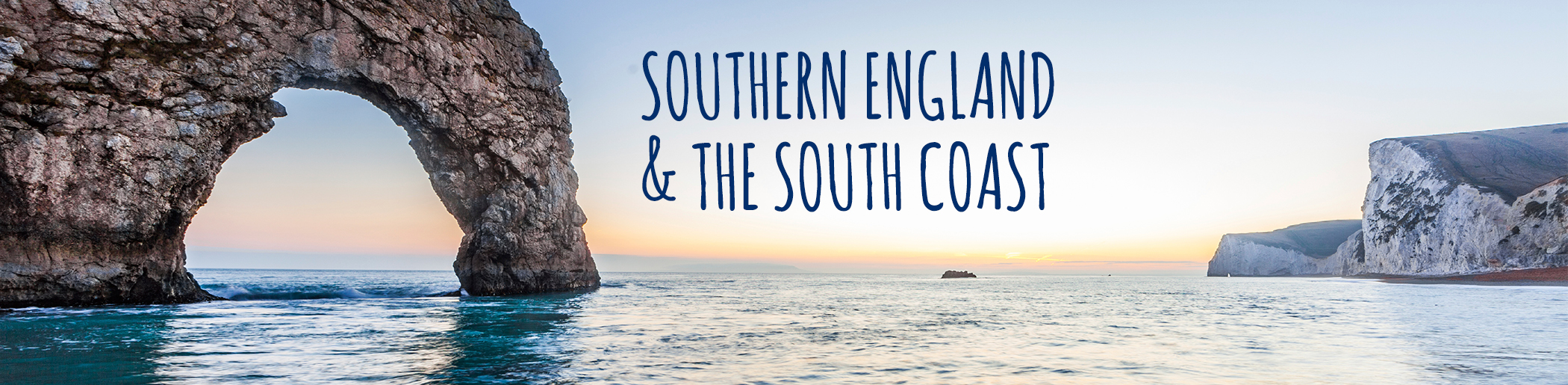
In Dorset, Lyme Regis is the gateway to the Jurassic Coast. The Cobb — the curving stone harbour wall made famous by The French Lieutenant’s Woman — is still the centrepiece, but the real draw is fossil hunting on the beaches towards Charmouth, where ammonites wash out of the cliffs after winter storms. Go in spring for the quietest beaches and the best fossiling.
The South Coast
Eastbourne has quietly become one of the south coast’s most appealing bases. It sits at the eastern end of the South Downs, beneath the chalk drama of Beachy Head and the Seven Sisters — arguably the finest clifftop walking in southern England — while the town itself keeps its Victorian pier, bandstand and a Blue Flag seafront. It is also one of the sunniest spots in the UK.
Portsmouth is the coast for anyone who likes their seaside with substance. The Historic Dockyard alone — HMS Victory, the Mary Rose, HMS Warrior — is a full day, and the Spinnaker Tower gives 350-degree views across the Solent to the Isle of Wight. Old Portsmouth and the Southsea seafront round out a city break with proper sea air. Further east, Dover guards the narrowest point of the Channel beneath its world-famous white cliffs, with the medieval castle above and the National Trust cliff walk towards the South Foreland lighthouse.
The East Coast
The east is where the English seaside is at its most traditional and least pretentious. Great Yarmouth delivers the full classic-resort experience — Golden Mile, two piers, the Pleasure Beach — with the wildlife and waterways of the Norfolk Broads on its doorstep. The Lincolnshire Coast, anchored by Skegness and Mablethorpe, offers miles of wide, flat sand, big Blue Flag beaches and the nature reserves of Gibraltar Point and Donna Nook, where grey seals haul out in their thousands in late autumn.
Up in the East Riding, Bridlington and East Yorkshire pairs a working harbour and long sandy bays with one of the great wildlife spectacles of the English coast: the seabird city at Bempton Cliffs, where half a million gannets, puffins and kittiwakes nest from April to August, just up the coast at Flamborough Head.
North Yorkshire
Scarborough is the original English seaside resort — people have been taking the waters here since the seventeenth century. Its two bays are separated by a headland crowned with a ruined castle; the South Bay keeps the amusements, the spa and the harbour, while the North Bay is quieter, with the Sea Life centre and Peasholm Park. It also makes the natural base for the Cleveland Way clifftop walks towards Robin Hood’s Bay and Whitby.
The North West
No round-up of the English coast is complete without Blackpool. Love it or find it overwhelming, nowhere else does the British seaside on this scale: the Tower, the Pleasure Beach, three piers, the trams, and the autumn Illuminations that stretch the season into November. It is brilliantly geared to families and unapologetically itself. For a gentler North West seaside, Southport brings Victorian elegance, Lord Street’s canopied shopping boulevard and a vast flat beach, while the Fylde Coast — Lytham and St Annes — offers championship golf links and a quieter, well-heeled alternative just south of Blackpool’s bright lights.
When to go, and how to do it well
- Spring (April–June) is the sweet spot for the coast path and the seabird colonies, with lighter crowds and clifftops full of sea pink and campion.
- High summer is peak season for the family resorts — book accommodation early for Blackpool, the Lincolnshire Coast and the South West in July and August.
- Autumn is underrated: warm seas, Blackpool’s Illuminations, the Donna Nook seals, and the best light of the year for coastal photography.
- Always check the tides before a beach walk — several of the finest stretches involve crossings that disappear at high water.
Ready to pick a stretch of coast? Our English Coast hub has every coastal destination in one place, with places to stay and things to do, and our best UK coastal walks guide covers the routes worth lacing up for.