Perched between two beaches and three hills on the shores of Cardigan Bay, Aberystwyth is the unofficial capital of mid-Wales — a spirited Victorian seaside resort, a lively university town, and a stronghold of the Welsh language all in one. Its sweeping seafront curves in a graceful arc of pastel-painted townhouses, backed by a promenade, a small pier and the atmospheric ruins of a medieval castle. Home to Aberystwyth University and the National Library of Wales, the town hums with students and scholars during term time, yet it remains an unhurried, characterful place where Welsh is heard on the streets and in the shops. Set roughly midway along the Welsh coast and framed by the foothills of the Cambrian Mountains, it is both a classic bucket-and-spade resort and a natural gateway to the wild uplands and waterfalls of the interior.
Top things to do in Aberystwyth
- The Promenade & “kicking the bar” — Stroll the elegant Victorian seafront from the castle to Constitution Hill, and join the local ritual of “kicking the bar” at the northern end, a quirky tradition said to bring good luck as you touch the railings at the promenade’s far tip.
- Constitution Hill & the Cliff Railway — Ride the longest electric funicular cliff railway in Britain, open since 1896, up to the summit for sweeping views over the town and Cardigan Bay, where on a clear day you can pick out mountain peaks across much of Wales.
- The Camera Obscura — At the top of Constitution Hill, peer into one of the world’s largest camera obscuras, which projects a live, bird’s-eye panorama of some 1,000 square miles of land and sea onto its viewing table.
- The National Library of Wales — One of the UK’s handful of copyright libraries, entitled to a copy of every book published in Britain, its free galleries display rare manuscripts, maps and Welsh treasures, with fine views over the town from its hilltop setting.
- Aberystwyth Castle — Wander the free-to-visit ruins of this 13th-century Edwardian concentric fortress, dramatically sited on a headland between the two beaches, with a surviving tower looking out over the bay.
- The Vale of Rheidol Railway — Board a narrow-gauge steam train that has run since 1902 for the scenic 12-mile climb inland through wooded valleys to Devil’s Bridge, famed for its plunging waterfalls and vintage Great Western locomotives.
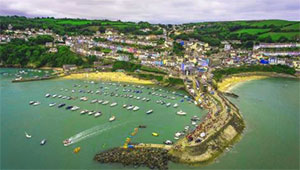
- The harbour & marina — Watch the boats at the sheltered harbour and marina at the southern end of the seafront, a pleasant spot for a waterside walk and a quieter counterpoint to the busy promenade.
- The Old College & the Ceredigion coast — Admire the neo-Gothic Old College, recently restored with new galleries and a café, then head out along the coast for boat trips in search of the bottlenose dolphins that frequent Cardigan Bay.
Getting to Aberystwyth
Aberystwyth sits at the western end of the scenic Cambrian Line, with direct Transport for Wales trains from Shrewsbury, where connections run to and from Birmingham and the wider English network. The route runs west through Welshpool, Newtown and Machynlleth — the operational hub of the line, where services from the Cambrian Coast branch join — before reaching the coast. The station sits close to the town centre, with a bus and coach station and taxi rank alongside. By road, the town is reached via the A44 from the east (through Llangurig and Rhayader) and the A487 coast road running north to south. National Express and TrawsCymru coaches serve the town, but it is worth remembering that Aberystwyth is genuinely remote by British standards: journeys across mid-Wales are longer and slower than the map suggests, so allow plenty of time and enjoy the scenery.
Best time to visit Aberystwyth
Summer is the classic season, when the promenade, beaches and pier come alive and the seafront cafés spill out into the sun — ideal for families and long coastal walks. Spring and early autumn are quieter and often just as rewarding, with mild weather, fewer crowds and the town still buzzing during university term time. One of Aberystwyth’s great natural spectacles unfolds from roughly the autumn equinox through to spring: at dusk, tens of thousands of starlings gather in swirling murmurations beneath the pier before roosting on its ironwork, with the finest displays typically in November and again in late February and early March. Winter brings brisk, atmospheric seafront walks and dramatic Atlantic skies, along with a lively calendar of festivals and university events throughout the year.
Where to stay in Aberystwyth
The grandest addresses are the seafront Victorian hotels and guesthouses lining the promenade, many occupying handsome townhouses with bay-facing rooms and sea views straight from the window. The town centre offers a good spread of independent guesthouses, B&Bs and small hotels within easy walking distance of the station, castle and beaches — convenient bases for exploring on foot. For longer stays and families, there is plenty of self-catering, from apartments and cottages in and around town to holiday parks along the surrounding Ceredigion coast. Options range from budget-friendly rooms and student-town hostels to comfortable mid-range hotels, and booking ahead is wise in high summer and during major university and festival dates.
Food and drink in Aberystwyth
Aberystwyth punches above its weight for independent food and drink. The seafront cafés are the natural place to start, serving coffee, cake and ice cream with a sea view, while the town’s many independent restaurants and bistros make good use of Welsh produce — local lamb, cheeses and seasonal ingredients from the surrounding countryside. Down at the harbour and out along the bay you’ll find fresh seafood, from fish and chips to catches landed on the Cardigan Bay coast. The covered market in the town centre is well worth a browse for Welsh cheeses, baked goods, cakes and deli treats, and the town’s pubs and bars pour a good range of local Welsh ales alongside a friendly, student-fuelled atmosphere. For more ideas across the country, see our guide to Wales.