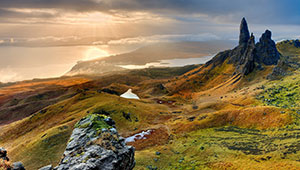
The Isle of Man (Ellan Vannin in Manx) is a self-governing Crown Dependency set in the middle of the Irish Sea, roughly equidistant from England, Scotland, Wales and Ireland — yet a world of its own. The entire island is a UNESCO Biosphere Reserve, the first whole nation to earn that status, recognising the way its glens, uplands, coastline and communities are managed together. Its identity is a rich weave of Celtic and Norse heritage: the Manx Gaelic language and the three-legged triskelion emblem sit alongside Viking-founded traditions, most famously Tynwald, the island’s parliament, which claims a continuous line of over a thousand years and is often called the oldest continuously running legislature in the world. Add motorcycling legend, Victorian railways and dramatic scenery, and you have a compact destination that punches far above its size.
Top things to do on the Isle of Man
- The Isle of Man TT & Snaefell Mountain Course — the world’s most famous road race runs on closed public roads over a 37¾-mile circuit; even out of season you can drive the legendary Mountain Course past Ballaugh Bridge and the Bungalow.
- The heritage railways — ride the Victorian Isle of Man Steam Railway from Douglas to Port Erin, the electric coastal Manx Electric Railway up to Ramsey, and the Snaefell Mountain Railway to the island’s only summit, where on a clear day you can see six kingdoms.
- The Great Laxey Wheel — the giant red waterwheel known as “Lady Isabella” is the largest surviving working waterwheel in the world, built in 1854 to pump water from the Laxey mines.
- Peel Castle & the House of Manannan — explore the ruined red-sandstone castle on St Patrick’s Isle, then step into Peel’s award-winning interactive museum tracing Celtic, Viking and maritime Manx history.
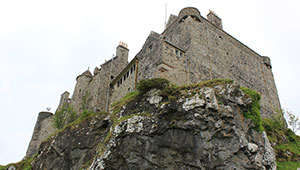
- Castle Rushen — one of Europe’s best-preserved medieval castles dominates the old capital of Castletown, its rooms furnished to bring the island’s royal and legal past to life.
- The Calf of Man & island wildlife — a small islet and bird observatory off the south-west tip, home to seabirds, seals and the celebrated basking sharks that gather in Manx waters each summer.
- Douglas promenade & horse trams — stroll the sweeping seafront of the capital and ride the restored Victorian horse-drawn trams that have clip-clopped along the bay since 1876.
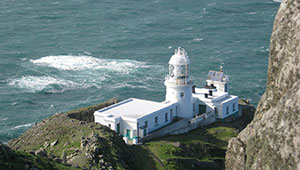
- The Sound — the wild southern headland looking across to the Calf, with a café and viewpoint perfect for watching seals bask on the rocks below.
Getting to the Isle of Man
The Isle of Man Steam Packet Company runs the passenger and car ferries into Douglas. The flagship Manxman sails year-round from Heysham in Lancashire (around 3¾ hours), while the fast craft Manannan operates seasonally from Liverpool (about 2 hours 45 minutes) between spring and autumn, with additional seasonal sailings from Dublin and from Larne in Northern Ireland. By air, Isle of Man (Ronaldsway) Airport near Castletown has frequent flights from many UK and Irish cities including London, Manchester, Liverpool, Birmingham, Bristol, Edinburgh, Belfast and Dublin. Note that the island is not part of the United Kingdom or the European Union — it is a separate jurisdiction with its own government, laws and currency (the Manx pound trades at par with sterling). No passport is required for travel from the UK or Ireland via the Common Travel Area, but if you drive over you’ll want to check your insurance covers the island.
Best time to visit the Isle of Man
Late spring and summer are the classic season. TT fortnight, spanning late May into early June, transforms the island into a global motorcycling festival — thrilling but hugely busy, with roads closed for racing and accommodation booked out many months ahead. A second wave of visitors arrives in August for the Festival of Motorcycling, incorporating the Manx Grand Prix and Classic TT (running across roughly 16–28 August in 2026). Midsummer, outside the race periods, is ideal for walking the coastal paths, riding the railways and spotting basking sharks. The shoulder seasons of April–May and September–October are quieter and gentler on the wallet, while winter is peaceful and atmospheric, though some attractions and seasonal ferry routes close down. Unless you are specifically coming for the racing, avoid the two motorsport fortnights if you want a calmer, cheaper trip.
Where to stay on the Isle of Man
Most visitors base themselves in Douglas, where a long line of Victorian and Edwardian hotels and guesthouses faces the sweeping seafront promenade, backed by modern hotels, apartments and self-catering options. For a more characterful stay, the west-coast fishing town of Peel, the sheltered southern resort of Port Erin and the northern town of Ramsey all offer smaller hotels, B&Bs and holiday cottages, while glamping, campsites and rural farmhouses suit walkers and families. One firm piece of advice: book far ahead for the TT and the August festival, when rooms across the whole island sell out and prices rise sharply — many race fans reserve a year in advance or bring campervans. For more island-hopping inspiration, see our guide to UK islands.
Food and drink on the Isle of Man
The island’s clean seas and hill farms give Manx cooking a genuine sense of place. The best-known speciality is the Manx kipper — herring traditionally oak-smoked over the kilns at Peel, still the smoking capital of the island. From the same waters come queenies, the sweet little queen scallops that are a local delicacy, best pan-fried simply with butter and served with a squeeze of lemon. On the land, the rare native Manx Loaghtan lamb, from a distinctive multi-horned breed, appears on many good menus, alongside Manx beef, cheese and hearty broth. Wash it down with ales from Okells, the island’s historic brewery brewing under its own Manx Pure Beer law, or try Bushy’s and other local craft producers. Seafront restaurants in Douglas, harbour bistros in Peel and Port St Mary, and country pubs across the glens all make the most of this larder — expect fresh seafood, local produce and a warm Manx welcome. Prices are broadly in line with the UK mainland, quoted in pounds.