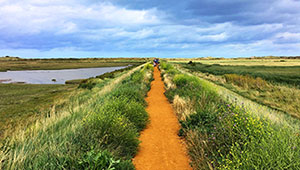
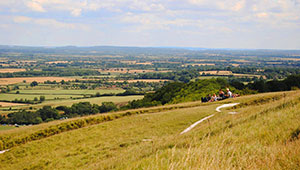
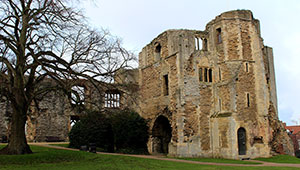
Essex is a county in the south-east of England with more variety than its reputation suggests. The county stretches from the Thames Estuary in the south to the Stour Valley and the Suffolk border in the north, taking in coastal marshes, ancient woodland, market towns with medieval centres, and one of England’s longest coastlines. It is also home to Colchester, the oldest recorded town in Britain, and Epping Forest, one of the largest ancient woodlands in the south-east — both within easy reach of London.
Colchester: Britain’s oldest recorded town
Colchester was the capital of Roman Britain before London assumed that role. The Roman walls — substantial sections of which still stand in the town centre — enclosed the largest Roman city in the province. Colchester Castle, built by the Normans directly on the foundations of the Roman Temple of Claudius, has the largest Norman keep in Europe by floor area and houses an excellent museum of Roman finds. The Dutch Quarter, settled by Flemish weavers in the 16th century, is a distinct and well-preserved enclave of timber-framed buildings north of the High Street. Colchester is also known for its oysters — the Colchester Native, harvested from the Colne Estuary since Roman times.
Epping Forest
Epping Forest is a 6,000-acre ancient woodland straddling the Essex-London border, managed by the City of London Corporation and freely accessible on foot, horseback and cycle. The forest is a remnant of the vast Forest of Essex that once covered much of the county; the ancient pollarded hornbeams — some over 400 years old — are among the most characterful trees in England. Queen Elizabeth’s Hunting Lodge in Chingford (the only surviving Tudor grandstand in the country) sits on the forest edge and gives excellent views across the woodland canopy. The forest is at its best in October and November for autumn colour.
The Essex coast
Essex has over 350 miles of coastline — more than any other English county — though much of it is the complex, fragmented tidal marshes and estuaries of the Blackwater, Crouch, Colne and Thames. The most visited resorts are Southend-on-Sea (with the world’s longest pleasure pier, stretching 1.3 miles into the Thames Estuary) and Clacton-on-Sea. The quieter stretches of coast — Mersea Island, the Blackwater Estuary, the Dengie Peninsula — are far less visited and more rewarding for birdwatching, sailing and coastal walking. West Mersea is the place to eat oysters: several waterfront restaurants and shacks on the island serve native oysters landed the same day.
Dedham Vale and Constable Country
The Stour Valley on the Essex-Suffolk border is one of the most painted landscapes in English art: John Constable grew up at East Bergholt, just across the Suffolk border, and the water meadows, mill ponds and flatlands around Dedham and Flatford Mill are directly recognisable from his most famous paintings. Dedham itself is a handsome village with a 15th-century church tower. Flatford Mill (managed by the National Trust) is open for visits and exhibitions; the adjacent Willy Lott’s Cottage — featured in The Hay Wain — still stands on the millpond.
Historic houses and castles
Audley End House near Saffron Walden is one of the grandest Jacobean mansions in England, set in Capability Brown-designed grounds and managed by English Heritage. Layer Marney Tower, near Colchester, has the tallest Tudor gatehouse in the country. Hedingham Castle, a Norman keep built around 1140 in Castle Hedingham village, is one of the best-preserved Norman keeps in England and still in private hands. Ingatestone Hall is a largely unaltered Tudor mansion built by Sir William Petre in the 1540s, open on selected days.
Saffron Walden and the north Essex market towns
Saffron Walden is arguably the finest market town in Essex: a compact medieval centre with timber-framed buildings, a large parish church with a soaring Perpendicular tower, a restored Victorian corn exchange and a genuine independent high street. The town takes its name from the saffron crocus grown here commercially from the 14th century. The circular turf maze on the common is one of the largest surviving ancient turf mazes in Britain. Other notable north Essex towns include Thaxted (with a magnificent Perpendicular church and a working windmill) and Coggeshall (one of the most complete collections of medieval timber-framed buildings in the county).
Getting to Essex
Essex is well-served by rail from London Liverpool Street, with fast trains to Colchester (around 50 minutes), Chelmsford (30 minutes), Southend-on-Sea (50 minutes via Fenchurch Street) and Harwich International. By road, the A12 is the main artery from London to Chelmsford and Colchester; the M25 and A13 give access to southern Essex and Southend. Stansted Airport, on the Essex-Hertfordshire border, has direct services from across Europe.
Best time to visit Essex
Late spring and early summer (May to July) suit the coastal resorts and country house gardens, with Audley End and the market town festivals at their best. Autumn is the finest season for Epping Forest and Dedham Vale. Colchester is worth visiting at any time of year. The Mersea Island oyster season runs September to April — the traditional “R month” rule — making autumn and winter visits particularly rewarding for food-focused travellers.
Where to stay in Essex
Colchester and Chelmsford have the widest range of accommodation in the county, from chain hotels to independent B&Bs. Saffron Walden and Dedham have several character hotels and guesthouses well-suited to a weekend break. The Mersea Island area has self-catering options and a handful of B&Bs. For coastal stays, Southend-on-Sea has large seafront hotels; quieter options are available around Frinton-on-Sea and Mersea.